
 Continue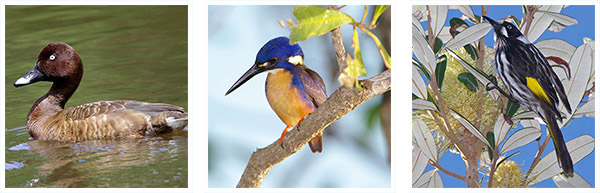
View Birds
Size: {{ bird[birdId].size }}
Where: {{ bird[birdId].where }}
What to look for: {{ bird[birdId].what }}
Size: {{ bird[birdId].size }}
Where: {{ bird[birdId].where }}
What to look for: {{ bird[birdId].what }}
A bird
VISIT a beach
Learn to identify Birds on the beach by checking out the Birds of the Bay photos
Help Keep Our Beaches Clean
Walking along the beach is one of the most healthy and enjoyable experiences we all have experienced building a memory of lifetime experiences and stories which are passed on to children, grandchildren and friends.
The View Birds button on the app home screen you can find information on each of the birds and share your beach experiences and memories, with family and friends.
An appreciation of the need for environmental protection of our beaches and oceans from the threat of climate change, plastic pollution and rubbish left
Ron Smith (Author) and Bob Winters (Photographer)

Ron Smith is a Melbourne based publicist specialising in community awareness campaigns with a history of community environmental and consumer activity over forty years.
From leading a major conservation group in the Dandenong Ranges to the development of the Victorian Government’s first water conservation campaign ‘Save Three Buckets a Day’, he has maintained a constant interest in environmental education and environmental policies.
He trained as an art teacher and was responsible for having first aid tips included in Telephone books and introducing the concept of school camps into Fraser National Park at Lake Eildon.
He is a Life Member of Kidsafe Victoria, Director of Communications at the Victorian Artists’ Society and a Victorian Volunteer of the Year for The Disabled for his work with Limbs for Life and disabled golfers.
Ron Smith OAM
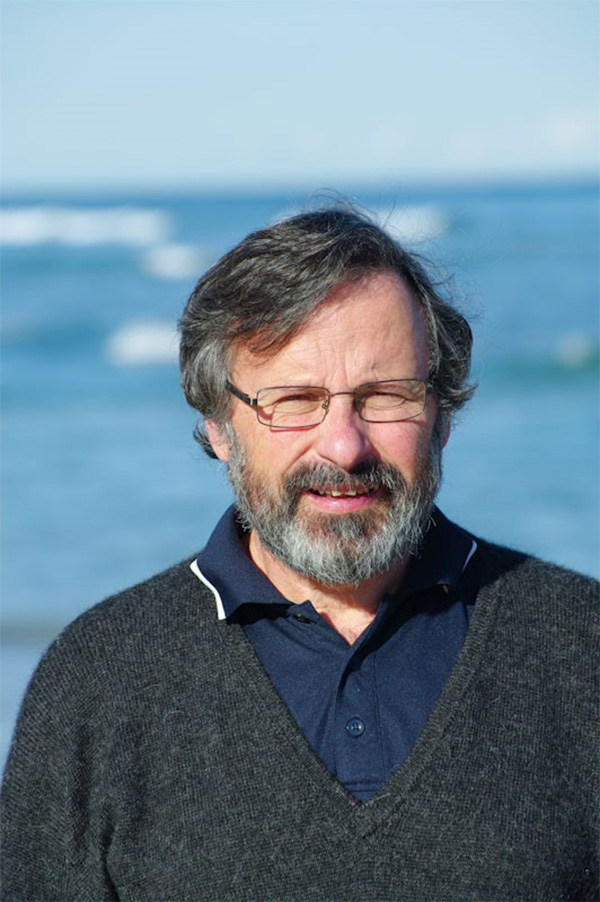
Bob Winters is one of Australia's leading sustainability educators. For more than 35 years he has been working with children, schools and the community to improve their environment.
Bob is an author of more than 80 environmental education and nature books. He continues to create significant environmental and sustainability curriculum materials for schools.
His other major focus is as a successful nature photographer.
Bob continues to regularly teach children about the environment today.
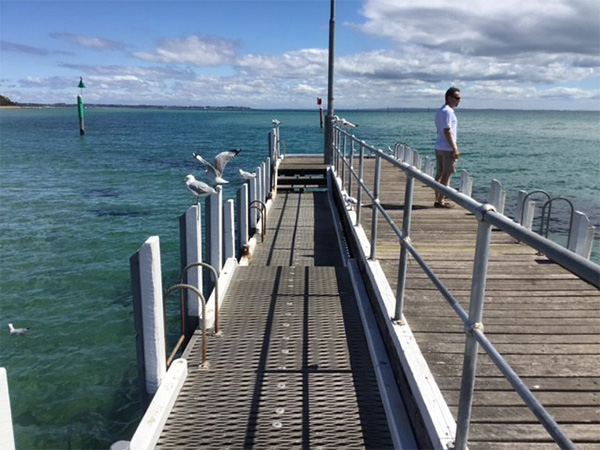
Tip 1: Look for movement
Our eyes are very good at seeing movement. Don’t forget to look at the sky for flying birds. It is hard to see moving birds on windy and cloudy days.
Tip 2: Look in the direction of calling birds
Our ears are good at pin pointing the location of where a sound is coming from. Keep searching in the direction of the call until you find the bird.
Tip 3: Look for birds at different times of the day
Some birds are most active at dawn and dusk. Other birds move between different gardens. On hot days, birds will often rest in the middle of the day. You will find more birds if you look for them at different times.
Tip 4: Learn to use binoculars
Many birds will not allow you to get close to them. Binoculars are used to see the details of birds. Ask an adult to help you learn how to use binoculars.
Tip 5: When watching birds, move slowly or not at all
Birds are very good at picking up movement. Compared to a bird you are very large. When you move towards birds, there will be a distance when they feel in danger and will fly away.
Tip 6: Don’t point
When bird watching with other people, it is very tempting to point where the bird is. If you are close to a bird and point with an outstretched arm it will look like something dangerous is moving towards it and it will fly away.
Tip 7: Find something helpful to identify birds
Birds of the Bay will help you identify the most common birds. There are bird books, posters, local brochures and the internet that can help you identify some of the other birds that might visit.
Tip 8: Make a list of the birds you see
Once you have identified a bird on the bay or at the beach keep a list and with the type of bird and location.
Tip 9: Write down what the birds are doing
Write down or draw a picture of what the birds are doing. When making your notes and drawings, write also the date and time of day.
Tip 10: Learn the different calls each type of bird makes
Most kinds of birds have their own call. Try to learn what calls each kind of bird makes. Some children are good at copying bird calls. Try to copy bird calls. The birds might answer back.
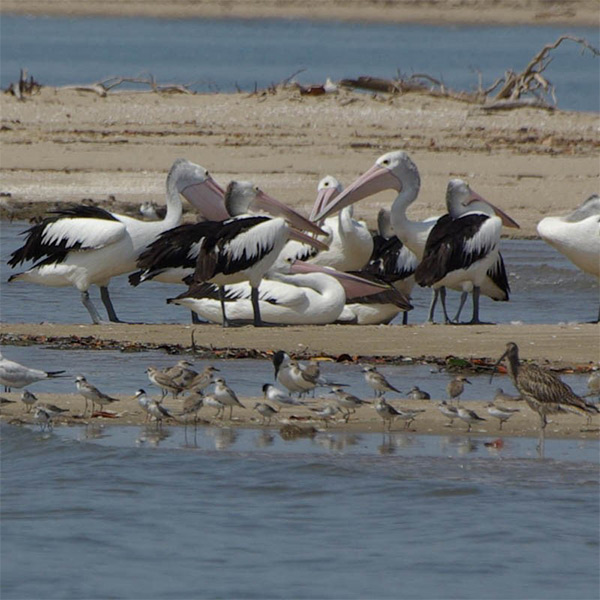
Birds come in a wide range of shapes and sizes. In this photo you can see some of the largest and smallest birds you might see in the Bay.
The pelican is one of the largest. The tiny stint is as small as a sparrow.
Pelican – 1.7m body and beak length
Pacific Black Duck – 55cm
Magpie – 40cm
Red-necked Stint and House Sparrow – 15 cm
ISBN 978 - 0- 9944758-0-0
Publisher: Ron Smith medialaunch.com.au Pty. Ltd.
Copyright © medialaunch.com.au Pty.Ltd and Bob Winters.
All Rights Reserved
ABN 69 067 524 921
PO Box 2412, Kew, Victoria 3101.
Internet: http://www.birdsofthebay.com.au
Email: info@birdsofthebay.com.au
Disclaimer:
Every effort has been made to ensure Birds of the Bay is free from all errors and omissions. Ron Smith, Bob Winters or medialaunch.com.au Pty. Ltd. do not accept responsibility for information presented on third party sites or products featured in Birds of the Bay.
All Rights Reserved
Reproduction or translation of any part of this work by any means, electronic or mechanical, including photocopying, beyond that which is permitted by the Copyright Law, without the written permission of the publisher Medialaunch.com.au Pty Ltd is unlawful.
Concept Development Ron Smith
Photography Bob Winters.
Editor Shirley Baynes- Smith
Web Design Preflight Pty Ltd